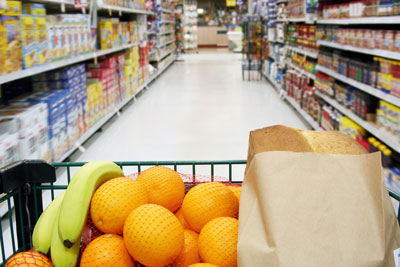
When I started this blog last week I had so many ideas of things to write about. The problem, is though, that it's impossible to write all of these different posts at once. I believe very strongly in eating things that are healthy for you and there are literally thousands of things I could tell you you should eat (and I will get there eventually) but often times, you need to have some basic guidelines for healthy buying first. Sometimes the daunting task of going grocery shopping (especially if you're trying to buy healthy foods) can feel more like a battle. Every soldier needs a strategy on the battlefield and thus, this is a list of some of the guidelines I have for when I go to the battlefield, er, store rather, for healthy grocery shopping:
1.
Don't Go to the Store Hungry!
Alright, alright, I had to start with an easy one. I had to mention it though because I used to be
really, now I'm talking
really bad about this. Kris and I would wake up on Saturday morning laze around for awhile, decide we would go to the store, and
then come back and have breakfast. The problem was though, that by the time we got to the store, it was time for lunch, and then well, those doughnuts are lookin' mighty delicious! It is really important to have a full meal, or at least a filling snack containing plenty of fiber (see previous post) before you go to the store. Nothing will tempt you to buy unhealthy foods more than when you shop with a grumbly tummy.
2.
Plan Before You Shop
Kris and I have gotten in the habit of meal planning for the week, yes it sounds boring, but it's actually pretty fun. We think about what kinds of things we might like to have during the week and then start brainstorming ways to add vegetables in to make it a more healthy, balanced meal. Even if you are in college and live on campus in a dorm, it is still possible to do this even with the snacks you buy. Think about the times when you usually have a snack, and decide what things would be good to eat during those periods. From this meal/snack plan you should make a shopping list. You are less likely to go off the beaten path and buy junk food if you know what you are at the store to get before you get there. This meal planner from Mead is what we use:
3.
Shop on the Perimeters of the Store
What I mean by this is, stay away from the inner isles. That's where most of the processed, ever-so-tempting junk food is. Produce, meat, and dairy and often organic sections are all usually around the outer edges of the store. That is the safest place to shop when you go to the grocery store. It's pretty hard to get in trouble when you're surrounded by bright, delicious fruits and vegetables. Of course, it's pretty impossible to
never go into the middle of the store, but the majority of your shopping should be on the perimeter.
4.
Shop on the Highest and Lowest Shelves
This is another tip for surviving the middle of the store. If you are in one of the center isles of the store, let's say the breakfast cereal isle, it will not take you long to realize that all of the sugary, chocolately, and most delicious of all processed and barren of all nutritional value will be right at eye level. Why is this? Because you are supposed to look at them more so that you will buy them. Let's be honest, if a store was trying to sell you Fruit Loops, it would be pretty silly for them to place them on the bottom shelf. The location and way items are placed in a grocery store is important to be aware of. Often times you are being tricked into buying something just because it's literally right in front of you. While this is not a hard and fast rule, the location part
always applies. For example, at Walmart, my favorite brand of cereal, Kashi, is located at the very end of the cereal aisle, pushed to the side, far away from the more popular brands. Also, the steel cut oats oatmeal is located on the top shelf whereas the flavored and instant oatmeals are right at eye level.
5.
Beware of Foods Making Health Claims
This rule is difficult for some people, but I have been tricked by products making healthy claims more than once, and thus I think it is important to mention. Have you ever seen an apple claiming to be "1/2 the fat" or a carrot with a label reading "100% carrot!" Of course you haven't. Why? Because these products are healthy for you naturally and don't need to make those claims. Often times products labeled with something to make you think that is good for you, is often misleading you.
For example, many kinds of foods that would normally have sugar in them release their "light" version often spelled "lite" to make it look even cuter. While it is true that there is no sugar in these kinds, the product is still sweet. Why? Usually it is because a chemical called aspartame is
added. Aspartame is also what is added to diet soda to still make it taste good. The problem with aspartame is it's third ingredient, methanol. In the body, methanol is converted into formaldehyde, embalming fluid. You know the stuff that those frogs were sitting in to preserve them before you dissected them? Yeah that stuff . . .Trust me on this one, while no sugar is generally
good for you, you are much better off with the real deal.
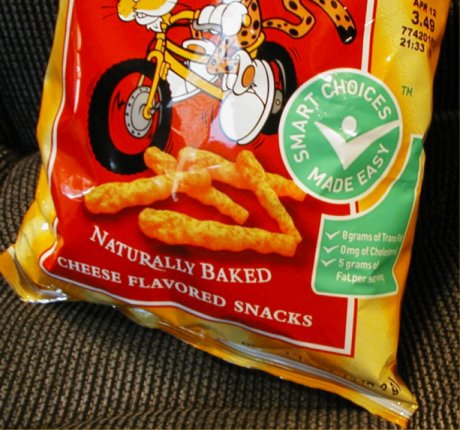
Foods claiming "0 grams Trans Fat" you should be suspicious of. The FDA allows foods contain less than 1/2 gram of fat
per serving to claim that they have 0 grams of trans fat in them. The answer couldn't be farther from the truth. If you buy a bag of chips that has 1/2 gram of fat per serving, sit down in front of the TV, and mindlessly eat 2-4 servings, you have consumed 1-2 grams of trans fat. According to Dr. Colbert, a fourteen-year study found that just a 2% increase in trans fats elevated a person's risk of heart disease by 36%.
Also as I touched on briefly in my last post, a lot of bread marked as "wheat" bread is no more than white bread dyed with molasses to give it a brown color. Look for bread that is whole wheat and read the ingredients to be sure it's not lying to you. Which leads me to my next tip:
6.
Always Read the Ingredient List
Things you want to avoid like the plague in ingredient lists include but are not limited to, any kind of dye, high fructose corn syrup, partially hydrogenated oils, hydrogenated oils, white flour, aspartame, mechanically separated meat (well anything mechanically separated really if I were you
, eesh), sodium nitrates or sodium nitrites (what dyes lunch meat to make it look pink and pretty in its package), and anything that sounds like something you learned about in chemistry class. If you can't understand or can't pronounce something on the list of ingredients it's probably not something you should be putting into your body. Trans Fat is often disguised as anything saying "partially hydrogenated" or "shortening."
MSG is a common ingredient found in processed foods. MSG enhances the taste of foods by increasing the sensitivity of your taste buds, making certain foods more addictive. MSG is associated with a large number of health problems such as obesity and excitrotoxicity. MSG is so tricky because it can be disguised as many different kinds of ingredients.
Watch out for these ingredients because they ALWAYS have MSG in them:
- Glutamate
- Glutamic acid
- Monosodium glutamate
- Monopotassium glutamate
- Textured protein
- Hydrolized protein
- Calcium caseinate
- Sodium caseinate
- Yeast extract
- Yeast food
- Autolyzed yeast
- Gelatin
For a more complete list of ingredients containing MSG I would highly recommend buying
Eat This and Live by Dr. Colbert. It is seriously one of the best books on nutrition I have come across.
7.
Read Nutrition Labels
I listed this one second after reading the ingredients because if you are eating a bunch of artificial chemicals it doesn't really matter much what the nutritional information is. However, reading nutrition labels is extremely important. The first thing you should notice when reading a nutrition label is the serving size. This is important because it tells you how much of a certain item you can eat and get the following nutrition from it. There is a big difference between a brand of cookie where a serving size will give you 20% of your daily value in fat in just one cookie, or in four.
Total fat and calories are also important to look at. However, often times products will decrease the fat in their products by making it up elsewhere. This usually occurs in the sugar or sodium section. Less fat or less calories, will often mean more sodium to make up for the loss of flavor so check it out before you buy. Saturated fat is what you especially want to look out for because it is a very bad kind of fat associated with cancer, heart disease, and high blood pressure.
Please, please, please be sure to look at how much sugar there is in what you buy. Food companies nowadays put sugar in
everything-you name it-crackers, bread, applesauce, oatmeal, etc. The sugar on the nutrition label will give you the amount of sugar naturally occurring as well as added so it is a good idea to pop back down to the ingredient list and see where sugar is located on the list (as well as anything that contains sugar such as high fructose corn syrup). Fruit juices are usually high in sugar, so you want to make sure you get a juice that is 100% juice so that you are only getting the naturally occurring sugar.The good news is that if a product has sugar in it, it probably doesn't contain aspartame, but still keep your sugar level to a minimum.
Minute Maid Juice Nutrition Label (notice the high sugar content)
8.
Buy Organic!
For a long time I didn't understand the fuss about organic and it make me mad when all of these hippies would come out of the woodwork and tell me I needed to support local farmers. After lots of research and reading though, as much as I hate to say it, those hippies were right! While supporting local farmers is honorable, the real reason to buy organic is so you don't get sick. Foods that aren't grown organically are usually tainted by pesticides, herbicides, parasites, and chemicals. When we eat foods treated with these things, they get into our bodies. Pesticide exposure has been linked to multiple sclerosis, epilepsy, leukemia, other cancers, Parkinson's, and Alzheimer's Disease.
While you might not be willing to buy organic for everything, there are some foods that you really should buy organic. Produce with thin peels are really important to buy organic. Foods with thicker peels usually protect the fruit from the pesticides, and since you don't usually eat the peel, it's not as big of a deal. Foods like apples, kiwis, strawberries, blueberries, raspberries, grapes, etc., should be bought organic though. Often times organic fruits and vegetables won't look as appetizing from the outside as other produce, but I can guarantee that they will taste better. I just had an organic honey crisp apple for lunch, and it was so good, it made me cry. Seriously.
Organic, as well as wild caught meat is also tons better for you than what you would normally buy. Any kind of meat, poultry, or fish that is not organic may have serious problems with it. Animals will store pesticides and other chemicals in their bodies in their fat. If you are not going to eat organic, you should at least switch to eating leaner kinds of meat so as to reduce the risk of ingesting pesticides that can harmfully affect your brain. When shopping for fish, always opt for wild Pacific or Alaskan over farmed fish.
Other products that I would recommend buying organic are milk (Horizon is a good brand), and other dairy products if you can, and snacks. Not all foods claiming to be organic are, however: Look for the USDA label on packaged foods to make sure they are certified organic.
9. Be Wary of Meat
Ever since Jamie Oliver's Food Revolution came out I have wanted to buy my own meat grinder. While it is usually better to lower the amount of red meat you eat, sometimes it is impossible to get around using ground beef or other kinds of meat. The problem with buying pre-packaged ground beef is best illustrated in this short video clip:
With how processed ground beef usually is, it is best to either grind your own, or find a cut of beef you like and have the butcher grind it for you. A caution with this as well: Unless you can watch a butcher grind your meat, you can't be sure that he is not adding meat that has been oxidized (started browning) to your nice cut of meat you are paying for. I am not saying that all butchers or distributors of meat are evil, but many have their ways of cutting corners.
All that I am trying to illustrate by this tip is the importance of knowing where your meat is coming from because most of us don't. If you haven't seen the video clip, please watch it because it will really explain all of this much better.
10.
Shop for Nutrition
When Kris and I first moved to Illinois just after being married, we were very worried about our finances. We spent hours coupon clipping and would come home completely excited when we found out we saved more than half of our bill. We got really good at saving money shopping by buying whatever was on sale, and using coupons. Everything seemed right in the world.
30 Pounds Later . . .
I talk about this jokingly, but I guess it's really not funny. Shopping based on just what's on sale and what's cheap is really not the way to go. Don't believe me? Allow me to illustrate. I buy a bag of potato chips on sale at the store for $3. It's a pretty big bag and I think
I can make it last awhile so I think I've lucked out. Wrong. What I don't realize is that when I eat these potato chips, I am less likely to stop at just one serving because they're just so addictive and I will probably eat them more often whenever I crave them. I will eat them quickly and will probably have to go to the store again at the end of the week and buy another bag (especially if I have a man living in the house). If that's not enough, my body isn't really benefiting from what I'm giving it. If anything, I'm harming it. Sure my taste buds might like it, but the rest of my body is yelling at me to STOP PLEASE!.
Compare this to buying a box of Kashi Pita Chips. You buy the pita chips for around the same price, maybe a little more, but you measure out a serving size when you eat them. Why can you just eat a serving size? Because of the nutrition that's in them. You will not only be satisfying your taste buds, but you will be giving your body something that it can use to make you healthier and curb your appetite. You'll be giving your body whole wheats, fiber, and other good things. You will eat less of them and therefore won't have to buy them as often. What seems like the better option?
While not all examples line up that nicely, the concept is still important to keep in mind. As Dr. Catherine Shanahan says, author of
Food Rules, think of it this way, instead of shopping for food in terms of bulk, shop for the nutrition that's in the food. By shopping for the nutrition that's in food, you'll be spending your money on foods that are more filling and being healthier, which is ultimately what is most important. Just think of all the money you'll be saving on doctor's bills in the future by avoiding all kinds of health problems!
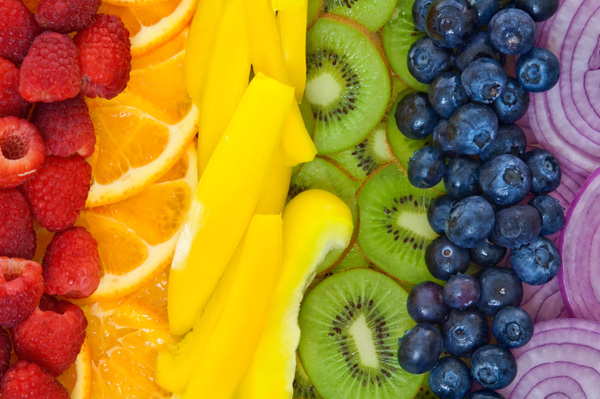
*You should try to spend a fairly decent portion of your grocery budget on produce, and in all different fun colors! Roughly half of every meal should be fruits and vegetables. This may mean you need to go to the store more than just once a week as well, but it is definitely worth it!
Concluding Remarks
While there are many other tips I could have included, I wanted to give you the top ten that I use when I shop personally. Just to clarify, I haven't ever taken any classes on nutrition, nor am I a medical professional in any way, shape, or form. I am however, someone who is concerned about my family's health, both now, and in the future. I hope that in providing you with these ideas I can give you a layman's view on the best ways to pick healthy foods when shopping. Feel free to leave other comments or questions below. Thanks for reading and eating along with me!